Showing posts with label Haruki Murakami. Show all posts

Thursday, January 22, 2009

Thursday Things

Hello, readers. It's been a while. A few things have happened. There's a new president, for one. People seem to think he'll be great, or possibly fail, but most hope he succeeds. Except for this guy. Also, it's possible that life, the universe, and everything, including you, reader, is just one big hologram.

Three other things, then, from our holographic universe:
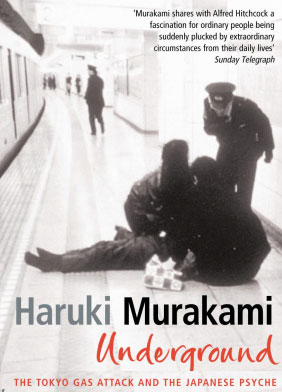
Thing 1) Haruki Murakami wins the Jerusalem award, which is given to those authors, like Arthur Miller or Simone de Beauvoir, whose work deals with "human freedom, society, politics, and government."
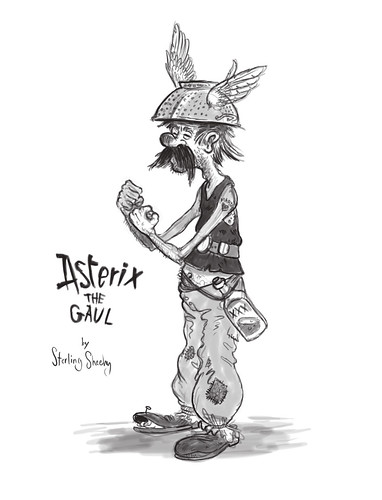
Thing 2) The Louvre opens an exhibition of original plates by comic book artists, which makes sense considering the French love of Tin Tin and Asterix and other les bandes dessinees. "Just like comics are not only fun or for entertainment," curator Fabrice Douar says, "the Louvre equally is not dusty and boring." [via Rhea Cote Robbins, photo AP/Thimault Camus]

Thing 3) TIME talks the evolution of publishing, relating our current time of economic and technological transformation to the fluxy turn of the 18th century when new fangled things like capitalism and printing technology brought about the "novel" as we know it today. Things like fan-fiction, wikipedia, and YouTube, according to TIME, have lessened the freakiness of self-publishing and pushed copyright to its limits, and may lead to a form of fiction "ravenously referential and intertextual." The article ultimately posits a future dichotomy between Old Publishing ( "stately, quality controled, and relatively expensive" ) versus a New Publishing ("cheap, promiscuous and unconstrained by paper, money, or institutional taste"). [photo Getty/Chris Jackson]

Happy Thursday, readers.

ttfn.

Monday, January 12, 2009

Magical Monday

Hello, readers. Welcome to a new week. Here are magical things.


It's Haruki Murakami's birthday today. Or at least, it was. I'm fairly certain it's already tomorrow in Japan. In any case, Murakami's a magical sort of man. He believes in trances. He writes scary, weird, and wonderful books, like Hard-Boiled Wonderland and the End of the World, in which unicorn skulls have dreams. His latest book, What I Talk About When I Talk About Running, talks of his passion for long-distance running. Check out Laura Miller's interview with him, here, and a more recent one about the relationship between marathons and writing, here.

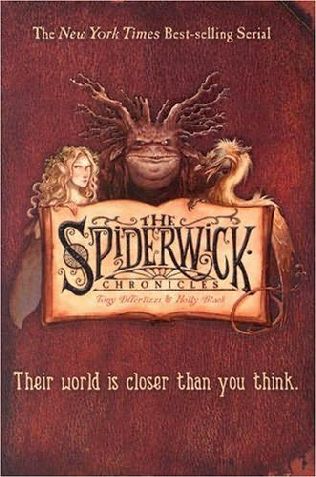
Speaking of Laura Miller (who may or may not eat cheerios while watching Battlestar), To the Best of our Knowledge talked with her yesterday as part of their program on "Magical Thinking." She discussed, among other things, how she learned to be both a skeptic of, and believer in, Narnia. Other guests included, Robert Price, who discussed "pop mysticism" and The Secret. As well, Mark Barrowcliffe, author of The Elfish Gene: Dungeons, Dragons, and Growing Up Strange, and Holly Black, author of The Spiderwick Chronicles, both stopped by to talk about the value of alternate realities.

Finally, McSweeney's has published a children's illustrated guide to cold fusion. One suspects there may be some kind of chicanery afoot.

So long, gentle readers. Remember, the magic was inside you all along.

Thursday, December 11, 2008

Writerly Routines

The Schedule of One Benjamin Franklin

Are you a writer? Do you have a routine? Benjamin Franklin and the government of Oceania both advocated that slavery and freedom were not so oxymoronic as one might suspect. I myself have found that a rather absurd level of self-imposed discipline broken up by occasional bouts of whimsy works best, which is to say that generally I wake and write and read during the same times each day unless something remarkable happens like an Arrested Development marathon on G4*.

io9 has posted the routines of science fiction writers. Kingsley Amis discusses pajamas and nicotine and drinking tea until the bars open up at 6. He finds afternoons to be a dreadful time to do anything. Haruki Murakami believes that his routine is perhaps as important as the writing itself. Repetition mesmerizes him into a deeper state of mind.

For more writerly routines, make a habit (oh, humor, you rascal) of visiting daily routines, a repository of how people more famous than you organize their days.


*This isn't entirely true. It's a complete lie in fact. I only ever watch Arrested Development marathons on holidays, such as this past Thanksgiving. Or the Christmas before that. Or the Thanksgiving before that. You might call it a rou--(oh, enough of that already).

Friday, October 17, 2008

Strange Mash-ups of the Literary Sort

Sometimes strange combinations set our brain on fire. Take for example, the new book by Leonard Cassuto, Hard-Boiled Sentimentality: The Secret History of American Crime Fiction. Cassuto makes the argument here that the oh so manly cynical gumshoes of the past hundred years or so--Marlowe, Spade, Archer--can be traced back to the oh so quiet but angry women of the nineteenth century sentimental novel. Both, it seems, are in search of home and domesticity in a society that's failed them. Sarah Weinman has a nice look at the book over at the LA Times.

And in a very direct bit of hard-boiled sentimentality, check out an excerpt from "The Pooh Also Rises," by Alan Coren, a brilliant and, sadly deceased, humorist for the Times. As you might guess from the name, it's a mash-up of sorts between A.A. Milne's Pooh characters and the prose stylings of Ernest Hemingway.

‘Do you hear the guns?' said Pooh.

‘Yes,' said Piglet. ‘I hear the guns.'

Is your brain burning, yet?