Showing posts with label Oxford. Show all posts

Thursday, March 26, 2009

Oxford Conference for the Book


Quick post, events occurring.

Today marks the beginning of the 2009 Oxford Conference for the Book. Each year, a Mississippian of artistic bent, generally deceased, gets celebrated. Last year it was Zora Neale Hurston. This year it's Walter Ingils Anderson, an author, blockprinter, and children's book illustrator, among other things.

If you're in the area, check the schedule, stop by for some of the events.

On the third floor of the University library, there's an exhibition of Mr. Anderson's watercolors and ink drawings inspired by classic works of literature (Alice in Wonderland, Paradise Lost, Don Quixote, and so forth).

Tomorrow morning (Friday morning), Trenton Lee Stewart author of The Mysterious Benedict Society will be reading and talking with fifth graders. He'll be signing books, as well, along with Jay Asher at Square Books, Jr. at 3pm.

And on Saturday, don't miss Jack Pendarvis doing something Pendarvisian at his reading alongside fellow author folk, Steve Yarborough and John Pritchard.

The whole thing ends Saturday at 6 at Off-Square, where there'll be a marathon book signing/Granta/Square Books party.

Reportage and pictures forthcoming.*

ttfn, readers.

*Unless they don't, but hopefully they will. Depends, mainly, on batteries being properly charged.

Sunday, March 15, 2009

Sunday Square Finds

Hello, readers. Your blogger spent his Sunday walking around the Oxford Square, perusing the shelves of our local booksellers. And he found things, some of them interesting, a few of them he'll share with you here. Pictures included where appropriate.

In the Believer, there is a list of the Fifty Greatest Things That Just Popped into Jack Pendarvis' Head. Included are such things as windows, curtains (because sometimes windows are too good to be true), and also, erm, something else representative and humorous but which I can't think of at the moment. For more of Jack, a person/thing which is great and often pops into my head unannounced in a hilarious manner similar to that of Kramer from Seinfeld, visit here, which is the place where Jack Pendarvis has a blog.

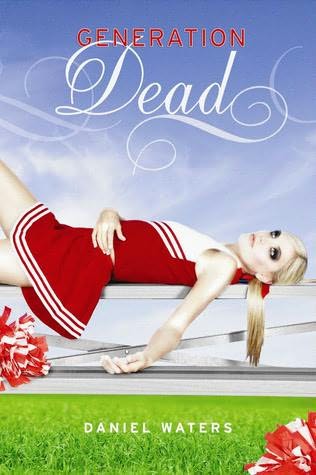
At Square Books, Jr., John Green's Looking for Alaska called out to me, but he will be read later. As well, perhaps, as will something called The Chronicles of the Imaginarium Geographica, a series concerning the geography of imaginary places. What truly stuck out to me, though, was the great number of books concerning the awkward and occasionally tragic experiences of attending high school with zombies, or as they're called in Generation Dead, the living impaired, or differently biotic. It seems zombies are not quite the brainless moaners of yesteryear. They listen to music. They ride the bus. They hope you will sit with them in the cafeteria, but they know you won't because they smell funny. In You Are So Undead to Me, they receive counseling from a fifteen-year-old girl named Megan Berry. She's a zombie settler. It's her job to help the recently undead adjust to being no longer dead. Perhaps that all sounds a bit hokey, and rather--excuse the mixed monster punnage--defanging to the zombie mythos, but such premises appeal to me, at least in theory, because of their implicit and empathetic message that monsters are people, too. Frankenstein could have used an understanding listener like Megan. Perhaps he wouldn't have ended up quite so homicidal or alone.

Finally, but not leastly, a book called Born in Flames: Termite Dreams, Dialetical Fairy Tales, and Pop Apocalypses surprised me by existing and the more so by containing many amazingly schizophrenic and insightful rants into pop culture's milieu. Howard Hampton is the author. He's like Quentin Tarantino if Quentin Tarantino went back in time and ate Lester Bangs' brain so as to take his powers of criticism and hyphenation. Topics for Howard include a dissection of the beflanneled songstresses of the "weirdo republic"--Cat Power, Lora Logica, and Enid Coleslaw, plus a wonderfully long-winded and overly hypenated discussion of Lester Bangs himself. As someone once said, "knee-jerk intellectuals may find it easy to lampoon someone who takes pop this seriously, but Hampton is a writer--possibly the only one--who can analyze Buffy the Vampire Slayer in the context of D. H. Lawrence ("American Daemons") and make it work."

Until next time, dear readers, happy Monday, and if you see a zombie, take a moment to not run and really listen to what they're trying to say. If after a few minutes, it seems to only be "Grr...Argh," or the like, and also if they try to bite your shoulder, then probably you should go back to Plan A and start running.

Tuesday, October 14, 2008

Dennis Lehane Reading

Last night, Dennis Lehane, author of such moral tangle boxes as Mystic River and Gone, Baby, Gone, stopped by Off-Square Books to sign and read from his latest novel, The Given Day. Born and raised in Boston, Lehane's made his mark exploring that city's people and politics with a wicked good ear for dialogue and a compassionate sort of ruthlessness that doesn't flinch from ethical impossibilities that twist a reader's gut. The Given Day follows in that tradition, telling a story of social and political upheaval set, for the most part, in Boston at the end of the first World War: a time when the Spanish flu raged and the police in Boston went on strike, a time Lehane described at the reading as a moment when "power and fear" joined together and resulted in a police state, as that combination always does.

The chapter he read focused on a character named Luther, a character that Lehane felt overlooked in many reviews, and one he thought deserved a little more exposure considering he appeared in about half the book. Here we see Luther in Tulsa, before coming to Boston, as he learns to run numbers for Deacon, a wheelchair bound gangster with a surprisingly good singing voice. Luther's introduction to the world of lawlessness, of that little bit of crime that lets you feel the law doesn't own you, becomes our introduction as readers to the world and it's people. The chapter had a rollicking feel, Luther hitting the streets and poolhalls, other characters flashing by, speaking themselves to life and fading, as Luther gets immersed in the culture and learns that some people skim a bit for themselves, who's gonna know? God? The Deacon ain't god...

As outstanding as Lehane's reading was--and it's pretty cool to watch an author's face take on the personality of his characters--his Q&A managed to be outstanding-er. Highlights include:

When asked if he liked historical writing, he said that he'd noticed in his last two books he keeps going back further and further to the past. "When I try to write in the present right now," he said, "I just freeze. Feels like if I wrote a present day novel it'd be 600 pages of 'Indict, Dick Cheney,' 'Indict Dick Cheney,' and that'd be boring to write and boring. It'd be a polemic. I'm a oblique writer," he said. "I don't write autobiographical stuff."

A story about the first time he heard the letter 'r' pronounced--a cah accident on his street which he and a buddy visited and so overheard a blonde woman talking about what happened to her car. That stuck with them all day. They kept saying it to themselves, "car?", "car?", in a sophisticated sort of accent, "Did you come by car?", "Is that your car sir?"

The admission that despite his doubts over whether one could really fall in love with research, it was in fact very possible, and he had found himself near the end of a solid year of reading about 1919, asking himself if he really needed another book about Woodrow Wilson. "If there's a Trivial Pursuit game about 1919 I'd get all the little triangles and make it to the center first."

Worst part of writing about 1919? No evidence of a certain beloved curse word until 1955 or so.

The toughest question though concerned baseball. Upon being asked who he was rooting for in the Boston/Tampa playoff series--Lehane's been living in St. Petersburg for the last several years--he displayed a sort of sports fan schizophrenia, acknowledging that as of late he'd been a closet Rays fan, and now in the playoff series he found himself cheering both on, quietly. "Boston has a thing for David and Goliath stories," he said, "It's who we are, and now we're Goliath and I don't know what to do, I just don't."

Friday, October 10, 2008

A Long, Strange Week In Which The Best American Short Stories Came Out, Among Other Things

This will be a week long remembered. It has seen the deadline come and go for the Barry Hannah and Yellowwood Poetry contests, and it will soon see the end of many sleepless nights spent combing through manuscripts for those finalists to send on to the judges.

Also, the latest edition of The Best American Short Stories rolled out on October 8th, which seemed strange to me, as I remember seeing it in bookstores a month ago. Perhaps somebody cheated, or perhaps the space-time continuum experienced a brief tear. That might explain why everybody's acting of late like the world's about to end. Contributors this year include T.C. Boyle, Karen Russell, and Kevin Brockmeier, among others. A few reviews have already popped up. The St. Louis Post-Dispatch writes of "how good Rushdie was at assembling this anthology: a variety of writers, famous to first-timers, sifted from major magazines and little reviews, grand and little worlds." Kirkus called it "bleak but brilliant." Also, check out Adventures in Reading and their on-going series of blog posts in which they look at each story in turn.

Others things happened this week, I'm sure. Continuing collapses of one kind or another. A debate or two. And then there was the big fundraiser for The Yalobusha Review thrown on the Oxford square at Southside Gallery. Pictures and gratuitous self-congratulation forthcoming.

Monday, September 29, 2008

On the first Wednesday of every month, the English Department at Ole Miss, plus whoever else stumbles in or we wrangle along, convene at Jubilee on the square to celebrate the work of a fiction writer and a poet from our program. We call this Broken English. There's a shiny MC, a podium of many autographs, and a lot of very supportive, not too drunk, people. It's one of the cooler things about matriculating in Oxford, actually.

Here's what our shiny MC says...

"This Wednesday's reading features the soaring prose of fiction writer, Chris 'Don't Make Me Show You My Superpowers' Kammerud, and the lyrical phraseology of poet, Alicia 'Obama Mama' Casey."

Drinking begins at 8, the spoken word at 8:30. Stop by if you're in the neighborhood and say hello. I'll be the guy in a cape*.


*A superhero cape, not a Dracula cape. Probably I'll just wear a t-shirt.